
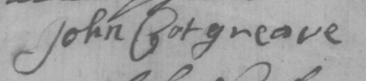
When John Cotgreave was born in 1683, his father Benjamin was a reasonably successful tallow chandler in Chester and his family seemed at least as secure as anyone else. But while John was still a child, Benjamin overreached himself, ended up owing “desperate” debts, could not remit money he owed to the government and had no choice but to join the army, went to fight in Ireland and was never heard of again. His property was mortgaged and seemingly lost to the family.
Luckily for John, his mother Joan was from a respectable Staffordshire family and must have used her contacts to find him an opening. By his 20s, he was living in the market town of Stone and working as a butcher, the same trade as his uncle William Brittain. He married a local woman called Katherine Fisher from nearby Trentham and started a family.
John Cotgreave cannot have been particularly well off and started climbing from the bottom of the ladder of social and civic hierarchy. At the age of 32, he served as one of the constables of the parish of Stone, a thankless, obligatory and unpaid task carried out by young men from families that were neither particularly rich nor particularly poor. Unfortunately for him, his term of office coincided with a riot that resulted in the town’s meeting house being pulled down. Because he and his fellow constable, Thomas Cartwright, failed to prevent the destruction, they were prosecuted at the Staffordshire Assizes for neglecting their duty.
But steady progress over the following decade meant that John Cotgreave was able to buy land and property in Stone and he served on the Manor Court. He was now sufficiently well-off that when it was his turn to serve as parish Overseer of the Poor, he was able to pay someone else to do the work for him. Likewise, he could avoid taking his turn in a scheme to provide poor children with opportunities when he paid £3 “in consideration for not having haveing [a child] as an aprentice”.
Perhaps his financial success gave him the confidence to reclaim his heritage because on 12 October 1732, he returned to Chester to claim the Freedom of the City, which he was able to do by hereditary right because his father Benjamin had been a Freeman before his economic fall. While he was there, he used his new rights to vote in the election for the city’s Mayor.
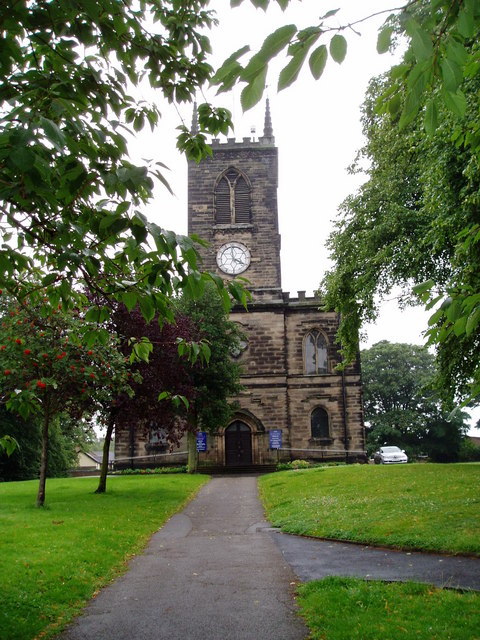
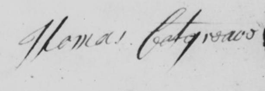
When John died back in Stone in 1745, and Katherine the following year, their wills were able to leave their son Thomas lands, houses, a business, contacts and status. There was even a piece of land known as “Cott Greaves dingle”. Thomas did not merely sign the vestry minutes as one of the principal local figures, he was one of eight “substantial inhabitants” appointed to collect the funds to build a new church under the legislation known as the Stone Church Stafford Act 1753.
When the building was complete, Thomas Cotgreave paid for more of the pews than most of the parishioners.
He served regularly on the Manor Court jury and met the property criteria for the jury at the county Assizes. He subscribed to various books, and when the rates were assessed, he owned land and property in three of the four divisions of the parish. In the 1750s, when a man was convicted of stealing one of Thomas’s sheep and sentenced to be hanged, the sentence was commuted to 14 years transportation.
Thomas had family in the area – at least four sisters had married locally and he had served as executor when one of them Jane Porter, died in the 1760s. But when Thomas’s children died before him – his son was 27 when he was buried at Stone in 1778 – in his final years, he knew that the Cotgreave presence at Stone was destined to be extinguished. The following year, he sold the lands his father had acquired.
He died in 1785 and after his wife Ellen passed away two years later, the estate was terminated with a series of receipts as his nieces and nephews each collected a substantial legacy.
Sources
Stone Church Stafford Act 1753, 26 Geo. 2. c. 38.
Parish Registers of Stone and neighbouring parishes, and of Betley.
Lichfield Record Office: Wills: Thomas Chamberlain of Drayton Hales 1679; William Britten of Betley 1687; Ralph Noden of Betley 1727, Jane Porter 1767; William Tayler 1731; George Adderley 1742; Matthew Lovatt 733; Ellen Corker 1757; Elizabeth Pateman 1748; John Cotgreave 1746; Katherine Cotgreave 1746; Thomas Cotgreave 1785; marriage licences John Cotgreave 1710; Thomas Cotgreave 1747; LD15/11/22/4;
Lancashire & Cheshire Record Society: , Volume 55, The Rolls of the Freemen of the City of Chester 1700-1805, p.307.
Staffordshire Record Office: D25/1/5; D628/18; D628/23; D4605/4/1; D5503/2; D(W)3222/299; D(W)1851/1/11/2
National Archives: ASSI2/5; ASSI2/17; C12/737/2; CO243/5, p.371; CUST48/4, p.138; T4/6, p.313.
Staffordshire Record Society, Collections for a History of Staffordshire for 1947,p.78.
Cheshire Archives: WS John Gleave 1685.
Walker, S (1783) Life Review’d, Pearson & Rollason, Birmingham, p.iv.
Antiquity or the Wise Instructer (1770), J Brooks, London, p.xi.
Pointon, P. (1770) Poems on Several Occasions, T Warren, Birmingham, p.xxi.
An Alphabetical List of the Names of all the Freemen of the City of Chester who polled for Mayor of the said City 1732, pp.6-7.

